Architect
Featured
Jun 3, 2026
Where Does Automation Fit Into Modern Interior Planning?
Modern interior planning is no longer only about gorgeous walls, premium furniture, and perfect lighting. Today people expect rooms that look elegant but also feel cozy and, on top of that, behave smartly during everyday routines. That’s kind of where home automation steps in as a key element of modern interiors.
For brands like Whitelion, automation isn’t merely a technology upgrade. It feels more like a design-friendly lifestyle approach that blends smoothly with modern homes, luxury apartments, villas, offices, and all those smart living setups where everything should cooperate.
What Is Home Automation in Interior Planning?
Home automation basically means tying together various home jobs, like lights, fans, curtains, AC, security, and appliances, so they are all controlled in a smoother way via a smart panel, a mobile app, voice command, or even an automation timetable.
In interior planning, this kind of automation is best added early on, like at the start of the design. If architects, interior designers, and homeowners think about automation before anything gets built, the completed place tends to look less cluttered more polished… and frankly, more premium.
So instead of tacking on devices later, Whitelion automation can be mapped into the interiors, so the tech fits nicely with the whole look and feel.
Why Automation Matters in Modern Interiors
A modern home is kind of expected to be practical, good-looking, and future-ready. Those old school switches, a bunch of remotes, wiring that shows, and hands-on manual controls can kind of mess up the neat look of a premium interior.
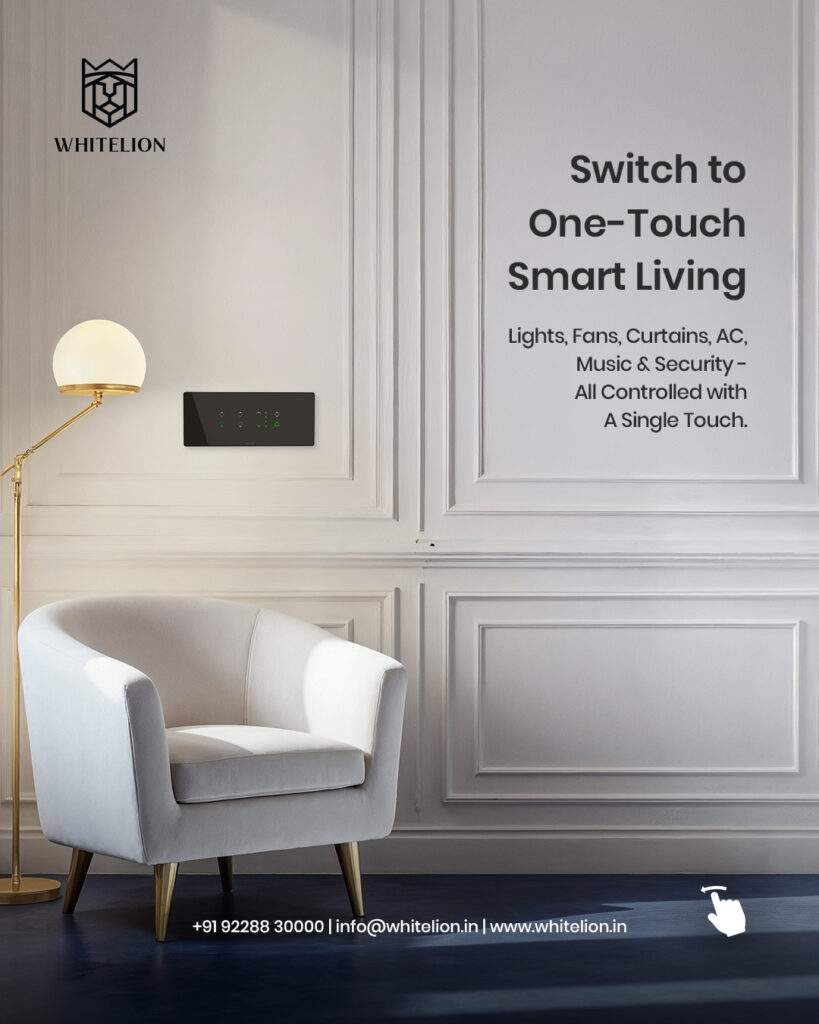
With Whitelion Home Automation, users receive central control without extra visual clutter. You can use one smart panel or just an app, and it can manage different home functions, so the place feels more arranged and effortless.
Like, instead of turning on lights, pulling curtains to the side, hunting the AC remote, and setting up the fan by hand, you can do it all with one tap, or just use a preset moment.
Use Case: Automation in Everyday Living
Imagine stepping into your living room after a long day. In a normal setup, you might end up turning on the lights, fiddling with the fan, shutting the curtains, and then setting the AC manually, kind of over and over again.
With Whitelion automation, just one tap and it sort of builds the right atmosphere for you.
The lights come on, the curtains glide closed, the AC kicks in, and suddenly the room feels like it’s ready. That’s why automation feels helpful not only for “luxury” moments but also for everyday comfort and plain convenience.
Feature Highlight: Smart Scene Control
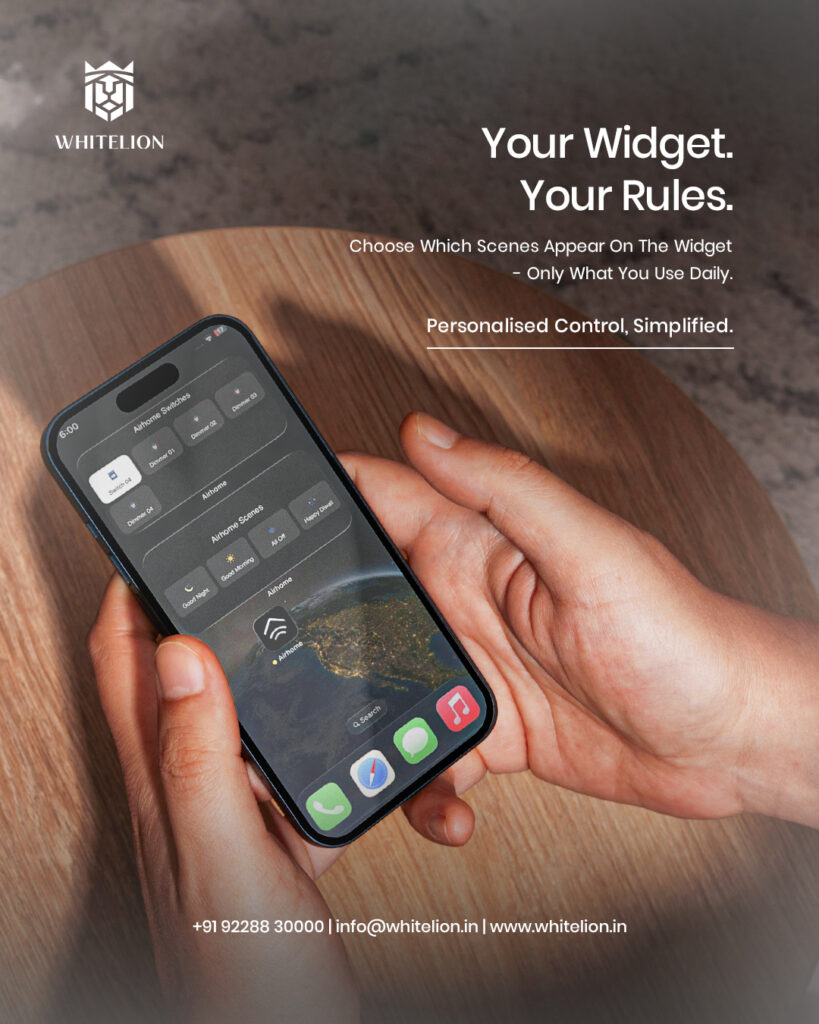
One of the more useful features in home automation is scene controlling, like you know setting a scene or doing “mode” stuff for lights, temperature, and even audio—kind of altogether, not just one switch at a time.
A scene allows users to control multiple devices together. For example:
- Movie Mode: Lights dim, curtains close, and AC adjusts.
- Morning Mode: Curtains open, lights turn on softly, and appliances start.
- Away Mode: Lights and appliances switch off when you leave.
- Relax Mode: Warm lighting and comfortable temperature create a calm mood.
This feature makes interiors feel more lived in, a kind of experience driven thing. The home doesn’t only look beautiful; it kind of adapts to the user’s routine and day-to-day lifestyle.
Where Automation Fits in Interior Planning
Automation can be planned in multiple areas of a modern home.
- In the living room, it helps control lights, curtains, fans, AC, and entertainment settings.
- In the bedroom, it adds comfort with bedside control, mood lighting, curtain automation, and night mode.
- In the kitchen, smart control can be used for appliances, lighting, and safety-based automation.
- In offices and workspaces, automation supports focused lighting, energy saving, and easy control of devices.
- In premium homes and villas, automation adds a luxury experience with centralized control across multiple rooms.
Benefits for Architects and Interior Designers
For architects and designers, automation kind of adds a lot of value to the project, without messing up the aesthetics, at all.
Whitelion smart panels are built to blend into modern interiors really well, so it doesn’t look out of place. They cut down on the need for lots of different switches and remotes, which helps keep the wall layout cleaner, and less cluttered.
On top of that, automation gives designers finer control over the whole ambience. With lighting moods, curtain control, and even appliance automation, you can support the overall vibe and the day-to-day function of the space.
So, in the end the finished project feels more premium, more practical, and future ready.
Aesthetic Advantage of Whitelion Automation
Interior design is kind of about details, you know. Even a switchboard can quietly change how a wall feels.
With Whitelion automation, you get smart panels that look clean, sleek, modern, and very design friendly. Instead of heavy bulky controls, the whole home gets a more refined, minimal interface, almost like it disappears in the background
And this is particularly helpful in luxury interiors, where every little component needs to fit the same overall design language.
Energy Saving and Smart Scheduling
Automation can also help cut down on energy waste. Lights, AC, fans, and other appliances can be timed or controlled from a distance, maybe even remotely, depending on how you set it.
For instance, if you forget to turn off the lights or the AC, you still can switch them off using your phone. Also, automation can be arranged, so devices shut down when they are not really required, not just “whenever”.
So yeah, Whitelion automation ends up being useful for everyday comfort and also for responsible energy usage.
Why Automation Should Be Planned Early
The best moment to bring home automation in is during the interior planning phase, you know, before things get locked in too much.
Doing it early usually leads to better cabling, a neater install, proper placement of the control panel, and an integration that feels smooth with the rest of the house design.
It also helps you steer clear of those last-minute alterations that can mess up the interiors look, or just make everything feel out of place.
When the automation plan is lined up together with the interior layout, it tends to feel less like an add-on and more like something woven naturally, like it was always part of the home.
Conclusion
Automation kind of fits into modern interior planning as that nice balance between design, comfort, convenience, and smart living, you know.
With Whitelion Home Automation, homeowners get to live in a space that looks great, but also works smarter, and is simple to manage. Things like smart lighting, curtain control, setting scenes, even energy-saving features, all of that bring real worth to daily life.
For modern homes, automation is no longer merely a luxury extra. It’s starting to feel more essential, like part of careful interior planning, not just an add-on.
Plan smarter spaces with Whitelion Home Automation.